This is the winter staple in our house. My daughter lovingly refers to it as simply “Daddy’s Stew,” but it’s Guinness Beef Stew. Though I have made it with other Irish stouts… just don’t tell the naming police.
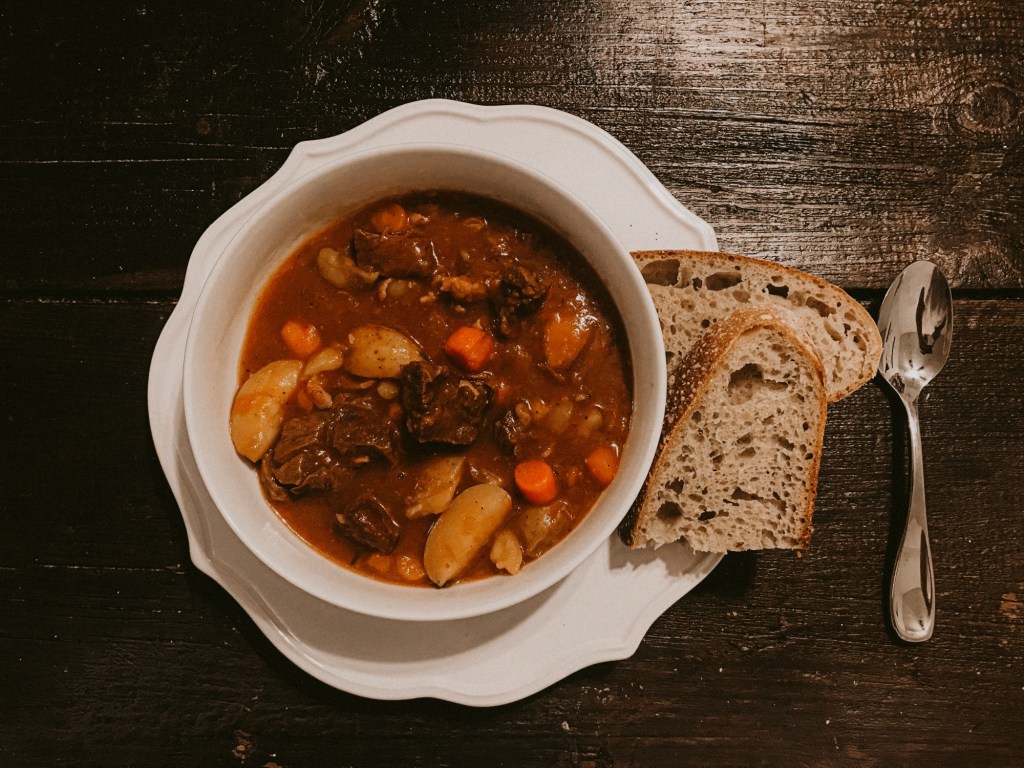
Guinness beef stew is a modern take on traditional Irish stew. The original was made with lamb or mutton, but many modern versions lean into beef. It’s built on potatoes, onions, and root vegetables like carrots, thickened lightly with flour, then left to slowly transform. Over a long simmer, the meat becomes tender, the vegetables soften, and the flavors melt together into something rich and deeply comforting.
One of my favorite parts is tasting it at the beginning of the two hour simmer, just to see how dramatically the flavors evolve by the end. It’s a quiet little reminder of what patience can do in a pot.
Now, I know many people serve their Guinness beef stew over a cloud of mashed potatoes. I fully support that decision. I will never stand in the way of butter and cream meeting thick stew. But in our house, I go a different direction.
I use fingerling potatoes directly in the stew. They hold their shape, soak up all that rich stout-laced broth, and give you little buttery bites throughout instead of one soft blanket underneath. It makes the stew feel complete in the bowl, like everything belongs exactly where it is.
I also take a little extra care when prepping. Every ingredient gets cut into proper bite size pieces. Not rustic boulders. Not carrot logs the size of a toddler’s forearm. Spoon sized. Balanced. Intentional.
A stew should fit perfectly on the spoon. A little beef, a bit of potato, a slice of carrot, all in one bite. That’s the goal. Every spoonful should taste like the whole pot. It’s a small detail, but it changes everything.
And then there’s the bread. A big, hearty slice of sourdough. Not optional. You need something with structure, something that can drag through the bottom of the bowl and come back heavy with broth. If you are not wiping the bowl clean with bread, we have made a serious tactical error.
This is not a rushed meal. It is not a weeknight shortcut. It asks you to slow down. To let the beef brown properly. To let the onions soften. To let the stout do its quiet work in the background while the house fills with that deep, savory aroma that makes everyone wander into the kitchen asking when it will be ready.
You can’t bully a stew into greatness. You can’t crank the heat and hope for magic. The transformation happens low and slow, in its own time.
And somewhere between the first taste at the beginning of the simmer and the last spoonful from the bottom of the bowl, you remember something simple.
Patience is the secret ingredient.
Guinness Beef Stew
Chef’s Note: I like to make this in an 8 quart (7.5 L) Dutch oven. It’s the perfect size to let everything simmer comfortably without overcrowding, and it distributes heat beautifully so every bite cooks evenly.
Ingredients
1134g Chuck Roast, cubed into bite-sized pieces
30 ml Neutral Oil
170g Bacon, cut into lardons (Round up to the nearest slice)
2 Medium Onions, diced
3 Garlic Cloves, minced
24g All-Purpose Flour
56g Tomato Paste
680g Fingerling Potatoes, halved or quartered depending on size
2 Carrots, cut into bite-sized pieces
960 g chicken broth
1 Bottle (330 ml) Guinness beer or other Irish stout
2 Bay Leaves
4 Sprigs Fresh Thyme
Salt and pepper, to taste (Season as you go)
Method Of Production
- Heat 30 ml of oil in your 8-quart Dutch oven over medium-high heat. Season the chuck roast generously with salt and pepper. Brown the meat in batches… crowding the pot is a sin. Remove browned meat and set aside.
- Brown the bacon until crisp.
- Toss in the onions and garlic, sautéing until soft and fragrant. This is where the smell starts to make your house feel like heaven.
- Sprinkle in the flour and stir until everything is coated.
- Add tomato paste. Mix carefully, scraping the bottom so it doesn’t burn, but allow the tomato paste to cook for a minute or two to deepen the flavor.
- Pour in the chicken broth and Guinness, scraping the bottom of the pot to lift all those delicious browned bits (the fond).
- Add the browned meat back into the pot.
- Add the fingerling potatoes and carrots.
- Add in the bay leaves and thyme sprigs. I like to tie them together into a little sachet using butcher twine so they are easier to remove later.
- Bring everything to a gentle simmer. Reduce heat, cover, and cook for 2 hours and 15 minutes, stirring occasionally. This is where patience starts to taste like magic.
- Uncover and simmer for an additional 45 minutes, stirring occasionally. Watch that broth thicken, the flavors deepen, and your kitchen fill with irresistible aromas.
- Remove bay leaves and thyme sprigs. Taste, adjust salt and pepper if needed.
 Meals with Mills