Grandma is probably rolling over in her grave.
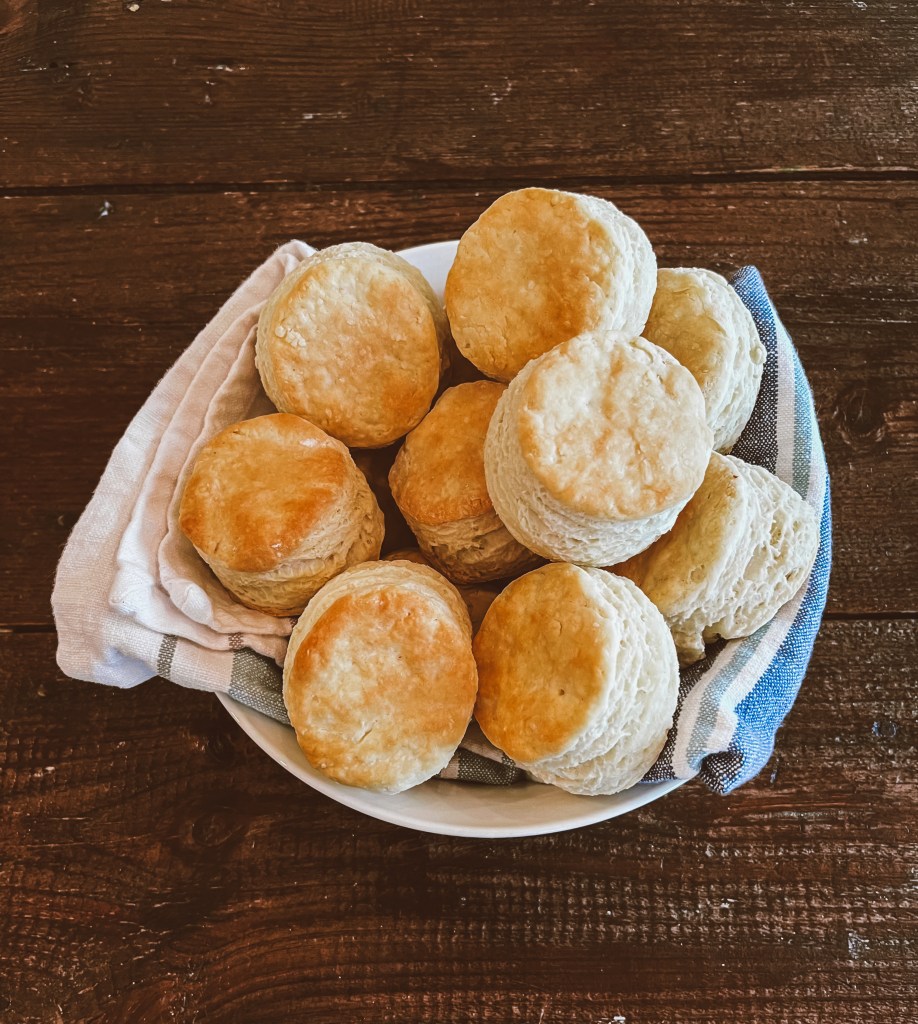
I come from a long line of biscuit makers. My great grandmother taught my grandmother, who taught my mom, who eventually taught me. And no, I’m not talking about the British biscuit, the crisp cookie. I’m talking about the Southern staple that has anchored our tables for generations. And let’s be clear: biscuits are not just for breakfast.
Southern grandmothers didn’t use recipes. They used instinct. A spoon, a bowl, a rolling pin. That was it. They mixed by feel. They judged the dough by touch. And if you looked like you were about to knead it too much, you risked getting smacked with that spoon.
For years I was terrified to “work the dough.” I thought if my hands lingered too long the butter would melt, the structure would collapse, and my ancestors would collectively disown me.
Fast forward a few decades.
Now I make my biscuits in a stand mixer. I work the dough more than Grandma ever would have allowed. And here’s the part that feels almost sacrilegious to say out loud: I can make biscuits better than Grandma.
Sorry, Grandma.
There is one thing I will never change, though. White Lily is the flour for biscuits. Not because Southerners cling to brands out of blind loyalty, but because it’s milled from soft red winter wheat with around 9 percent protein. Most all purpose flours sit at 11 to 12 percent. That difference matters. Lower protein means less gluten development, which means tenderness. It’s built for biscuits. Not bread.
This isn’t a recipe I expect you to nail on the first try. It might take a few rounds before you make one you’re proud of. Stick with it. It’s worth it.
Eventually you won’t need the measurements. You’ll stop looking at the bowl and start feeling the dough. You’ll know when it’s ready.
That’s why this post took me so long to write. I’ve been making biscuits by instinct for years. I couldn’t have told you the weights if you asked. I finally had to slow down, pull out a scale, and measure as I went.
Somewhere along the way, feeling turned into numbers.
And now you get both.
Buttermilk Biscuits
Ingredients
350g AP Flour
18g Baking Powder
8.5g Salt
56g Frozen Butter
225g Whole Fat Cold Buttermilk (Life is too short for low fat buttermilk)
50g Melted Butter
Method of Production
- Preheat oven to 350°F.
- In the bowl of your stand mixer, whisk together your flour, baking powder, and salt.
- Using your grater or Microplane, grate the frozen butter into the bowl of the stand mixer with your flour, baking powder, and salt mixture. Using the paddle attachment, mix at slow speed until the butter is well incorporated into the mixture. The flour should look coarse and mealy.
- Next, with the mixer still on low speed, slowly add the buttermilk until a shaggy dough forms. Stop mixing.
- Turn the dough out onto a lightly floured surface. Lightly flour the top of the dough and your hands and begin to gently press and fold the dough over on itself until the dough no longer feels wet and shaggy.
- After folding the dough over on itself a few times, lightly flour your rolling pin and begin to gently roll the dough out into a rectangle that’s ¾ – 1 inch thick.
- Fold the dough in half onto itself. Using the rolling pin, gently roll the dough out into another rectangle that’s ¾ – 1 inch thick. Repeat the fold and roll process 3 more times to build layers. *Note: You may have to lightly flour your rolling pin again.
- After you roll out your dough for the last time, use a 3-inch biscuit cutter. Dip your biscuit cutter in flour and cut straight down into the dough. Do not twist the biscuit cutter. Twisting seals the edges and hinders the biscuits from rising properly. Try to cut each biscuit as close to the edge of the dough as possible and as close to the previous cut as possible. I like to play a little game to see how many biscuits I can get on the first try.
- Place biscuits together on a parchment paper-lined baking tray, touching each other. They are communal and do better together. As they bake, they cling to each other and rise together.
- After you’ve cut as many biscuits as you can from the first roll out, combine the scraps and repeat steps 7–9. You won’t get as many biscuits as before, but there should be enough scraps to get one or two more.
- Bake in the oven for 15 minutes, then rotate the tray 180 degrees and bake for 15 more minutes.
- Remove from oven and brush hot biscuits with melted butter.
 Meals with Mills